HO 00 08–ISO HOMEOWNERS 8 - MODIFIED FORM COVERAGE ANALYSIS
(March 2022)
|
Menu Agreement Definitions Section I - Property Coverages Section I—Perils Insured Against Section II- Liability Coverages |
|
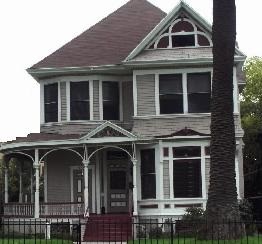
For many homeowners, the replacement cost option for
covering their property is either unavailable or not desired. This situation
typically arises when a home’s replacement cost is substantially greater than
its market value due to the structure being: ·
Too large in relation to current needs and
rebuilding costs. ·
Out-of-date or consisting of obsolete
construction. ·
Unsuitable for year-round or modern living
needs. ·
In need of frequent and costly maintenance. |
|
The HO 08, which provides coverage only on an actual cash
value basis, is a practical alternative for such situations. This is an
analysis of the ISO (Insurance Services Office) Homeowners Program’s Modified
Coverage form, 03 22 edition. Differences between it and the 05 11 edition
program will appear in bold.
Throughout, ISO made an editorial change. Any reference
to the term “policy” has been slightly revised to “Policy.” Likely in the hopes
to restrict application of meaning to a given, applicable insurance policy
issued to a given policyholder. (03 22 Change)
AGREEMENT
Under this provision, the insurance carrier agrees to
provide homeowners insurance (as described in the following policy pages) in
exchange for the named insured paying the policy premium AND complying with the
required policy provisions. BOTH conditions must be met in order to qualify for
coverage.
DEFINITIONS
The HO 08 form defines terms that are familiar to anyone who
uses ISO’s other HO forms. Specifically, it defines the following:
A. "You" and "your"
These are used in the policy to
refer to the "named insured" who appears on the policy’s
declarations. “You” and “your” also extend to the named insured's spouse, but
only if he/she lives in the same household.
"Our," "us" and "we"
These three terms are used as references to the company
providing the homeowner policy.
B. The HO 08 Modified Form policy also makes use of the following,
defined terms:
1. “Aircraft
Liability,” “Hovercraft Liability,” “Motor Vehicle Liability” and “Watercraft
Liability”
a. “Aircraft Liability,” “Hovercraft Liability,” “Motor
Vehicle Liability” and “Watercraft Liability” refer to legal liability for
“bodily injury” or “property damage” that is related to the use or ownership of
these items. Such liability would also encompass loss involving the following:
|
Maintaining, using, being within, operating, using, or
unloading or loading a craft (aircraft, watercraft, hovercraft) when
involving any person. (03 22 change). |
An insured permitting
another party to use a vehicle/craft (entrustment) |
Maintaining, using,
being within, operating, using, or unloading or loading a motor vehicle
when involving any person meeting the policy’s “insured” definition. (03 22
change). |
|
An insured's vicarious liability related to vehicle/craft |
An insured's negligent
supervision related to vehicle/craft |
|
b.
The vehicle and craft definitions include several, additional, descriptions:
(1) Aircraft -
refers to devices that are used or designed for flight. It does not include
model or hobby aircraft that is not intended (designed) to carry people or cargo.
(2) Hovercraft -
refers to vehicles that are powered by force of cushioned air; naturally, such
devices have motors. They must also be designed to travel over the ground, at
ground level. This means a self-propelled motorized ground effect vehicle and
includes, but is not limited to, Flarecraft (brand of air-cushion device) and
other air-cushion vehicles; and
(3) Watercraft -
refers to devices that operate on or in water. Movement can be powered by wind,
motors, or engines. It does not include model or hobby aircraft that is not
intended (designed) to carry people or cargo. (03 22 change).
Related Court Case: "Jet Ski" Exclusion
Held to Apply to A Variety of Similar Watercraft
(4) Motor Vehicle
– refers to a separate definition that appears later in this section
2. "Bodily injury"
This term refers to sickness, disease, or bodily harm, and
includes any resultant death. It also refers harm in the form of lost services
and related expenses to provide care in the aftermath.
3.
"Business"
a. “Business” refers to a trade, occupation, or profession,
EVEN when such activity occurs only on a part-time or occasional basis.
b., c. The policy now extends this definition
specifically to mineral rights at any insured location that an insured formally
leases and situations that qualify as Home-sharing host activities. (03 22
Change).
Related Court Case: Homeowner Leasing Property for Mining Must Be Defended (Classic)
d. The policy’s definition excludes the following instances
from its business definition:
·
Activities that only reimburse volunteers for
expenses that are directly related to the activity
·
An insured who provides home day care to his or
her relatives
·
Mutual exchanges of home day care services
|
Example: James retired
a year ago after a long career as a high school music teacher and band
director. He volunteers to assist the school music program by providing instrument
and singing lessons to each grandchild in his home every week. He gets $10
dollars for the lessons. The money goes directly for costs of instruction
materials, sheet music, etc. If a loss should occur during the lessons,
coverage should still apply as he is volunteering his services. |
|
The policy’s “business” definition above exceptions only
applies for activities that involve modest amounts of income. Specifically, an
activity is not considered to be a business if it generates no more than $5,000
(up from $2,000 - 03 22 Change) in compensation during the 12-month period
before the homeowner policy period.
Note: This refers
to the value of compensation, NOT merely cash. So, the details surrounding an
activity greatly affect how the activity is classified such as net vs. gross
income, how compensation is collected and the records an insured may have
regarding his business activity.
Related Court Case: Homeowners Policy Bars
Work-Related Claim
IMPORTANT: The definition of business
has been modified by mandatory ISO Form HO 06 58–Home-Sharing Host Activities
Amendatory Endorsement. The mandatory form also adds several, unique terms that
affect coverage. Optional form HO 06 68–Broadened Home-Sharing Host Activities
Coverage Endorsement should also be examined.
Related
articles:
ISO Homeowners Optional
Coverage Endorsements
ISO Homeowner Mandatory and
Optional Home-Sharing Endorsements
4.
Cannabis is a defined term. It refers to:
a. Consumable items that contain any measurable amount of either
natural or synthetic THC (Tetrahydrocannabinol) or cannabinoid. Essentially,
items that include chemicals derived from cannabis that are capable of creating
a feeling of euphoria.
b. Examples of items
referenced in part 4.a. include:
(1) plants or their parts
that belong to the Cannabis L. family. Flowers, roots, seeds, stalks, and stems
of such plants are included in the definition.
(2) The cannabis definition is even broader than what appears in 4.a. and b (1)
above. The term refers to mixtures and items derived from such plants or
chemicals (waxes, resins, oils, hash, hemp or even included in infusions and
edibles) including marijuana. (03 22 Change).
5. “Employee”
This term refers to a person whose duties involve tasks that
are NOT performed by a “residence employee” AND who either:
·
works for an “insured” on a direct basis, or
·
works for an “insured” through a leasing
arrangement between an “insured” and a company that leases employees.
6.
Home-sharing host activities
This term refers to the
following:
a. Making use of a covered residence, in whole or in part, available to persons
when the transaction is facilitated by any especially designed platform. The
transactions may involve paying a fee for the property’s use (renting) or other
exchanges of value.
|
Example: Len rents his
home out to Lara for a long weekend. Lara uses the home to host a reunion of
old band mates from various cover bands she played in over the years. The
whole transaction is completed using an online app. This qualifies as a
home-sharing host activity. |
|

7. Home-sharing network platform
a. Refers to, essentially, any digital medium created both for making
residential space and related property available for use by other parties.
b. The property use agreement (transaction) may be completed (rental
fee payment, exchange of services or similar form of compensation) via the
medium. It may include a website, phone application, community (network), etc.
(03 22 Change).
8, Home-sharing occupant
a., b. This term applies to the party or parties who contractually
agreed to make use of an insured’s residential and related property. The
contract has to have been made via a method that meets the policy’s definition
of a home-sharing network. Persons who occupy or use the property, along with
the party(ies) that directly participated in the contract, also qualify as home-sharing
occupants. (03 22 Change).
|
Example: Sharice rents out her home for several days to Marvin. It’s arranged
through the use of a smart phone app. Marvin is accompanied by two friends who
also make full use of Sharice’s home. While the rental agreement only lists
Marvin, both of his friends are considered home-sharing occupants. |
|
9. The Modified Form homeowner policy considers all of the
following to be insureds (with notes on any exceptions):
a. the status of insured includes:
·
you
(Refer to separate
definition)
·
your relatives if residents of "your"
household
(Meaning relatives
who live at the insured location with the named insured)
Related Court Case: “Adult Child Living on Own Held Not to Be an Insured”
·
persons under the age of 21 residing in
"your" household and in "your" care or in the care of
"your" resident relatives
Note: Such persons must BOTH be younger than 21 AND have a named
insured, his or her spouse or a relative of the named insured/spouse as their
caregiver.
b. The form’s
definition of insured includes persons who are residents of the named insured’s
household who are full-time students. In order for a full-time student to
qualify as an insured, he or she must either be younger than 24 years of age
and be related to an insured OR be younger than 21 years of age and be in the
care of someone in the named insured’s household.
c. The following persons are
insureds, but ONLY regarding section II, the liability portion of the homeowner
policy:
- Any
party having legal responsibility for either animals or watercraft that
are eligible for coverage under the homeowner policy.
|
Example: Shari
is sued because a dog she was walking broke loose from her leash, chased, and
knocked down a person who was also walking in the park. |
However, anyone in possession of
an insured’s watercraft or animal is denied insured status if any business
purpose is involved.
·
Any person working for an insured while
operating a motor vehicle that qualifies for homeowner coverage, and
·
Any person who has the insured’s permission to
use an eligible motor vehicle, but only while on the insured premises.
Related Court Case: “Automobile Exclusion Held Not Applicable to Liability Arising from Vehicle in
Dead Storage”
Note: Whenever the word “insured” immediately follows the word
“an,” the phrase refers to one or more “insureds.” In other words, an “insured”
means one or more persons who have covered status under the policy.
10. “Insured location”
This term refers to a variety of
circumstances that includes the following:
·
The residence premises (the policy also defines
this term, see below).
·
Parts of other premises or structures that are
used by an insured as long as these locations are shown on the policy
declarations page OR have been acquired by the insured as a residence during
the policy period.
·
Any premises that is related to a property that
is covered by a Modified Form policy AND which is used by an insured.
·
A premise that IS NOT owned by an insured but is
an insured location while it’s used by an insured as a residence.
·
Vacant land that is owned by or rented to an
insured EXCEPT farmland.
Related Court Case: "Vacant Land" Held Not Covered from Moment It Is Occupied
·
Land that contains a structure that will
eventually be an insured’s (1 through 4) family residence.
Note: The building has to be for the insured’s residence. Land
where an insured is building a residence that he plans to rent to another party
would not be an insured location.
|
|
Example: Paula
inherits a plot of vacant land from her parents. Because of its location, she
decides to start building a two-family home. She plans to sell it on speculation.
This is not an insured location. |
Related Court Case: “Coverage for “Vacant Land” Cannot Include Small Structure”
Other situations that qualify as
an insured location include:
·
An insured’s individual or family cemetery plots
or burial vaults.
·
Part of a premises which is rented and used by
an insured (as long as no business activity is involved).
11. “Motor vehicle”
A motor vehicle is a vehicle that
is self-propelled, runs on land or on water (amphibious - 03 22
change), and includes any trailer that is towed or carried by such a
vehicle. All of the following would qualify as motor vehicles:
|
cars |
trucks |
vans |
recreational vehicles |
certain golf carts |
|
motorcycles |
mopeds |
all-terrain cycles |
all-terrain vehicles |
snowmobiles |
|
sports utility vehicles |
motorized carts |
self-propelled mowers |
lawn tractors |
motorized bikes,
scooters, and similar vehicles |
|
Any of the above
items that are designed as amphibious (capable of operating on land, water-
including underwater), also qualify as motor vehicles. (03 22 Change). |
||||
Any vehicle or amphibian
that is motorized and self-propelled is considered to be a motor vehicle. Both
of these elements must be present.
Related Court Case: “ATV
Injury Not Covered by Homeowners Policy”
Items such as sleds, non-motorized
carts, bikes, boats, and similar property do not qualify as motor vehicles.
Related Court Case: “ATV
Injury Not Covered by Homeowners Policy
12. “Occurrence”
This term refers to an accident
and also to repeated exposure to similar conditions. However, in order for the
accident or repeated exposure to be considered an occurrence it must cause
"bodily injury" or "property damage" and that BI or PD must
take place during the policy period.
Related Court Case: “Defamation is Not an Occurrence”
13. "Property damage"
This term refers to direct damage
to tangible property (including its destruction) or the direct or indirect
damage caused by the loss of use of tangible property.
Note: It is likely that the
property damage definition will be revisited in light of the loss exposures
accompanying the recent viral epidemic. Lawsuits continue to arise that
challenge the understanding of what constitutes property damage. Merely the
high volume of such claim allegations has caused state regulators and
legislatures to consider creating a new coverage obligation in this area.
14. "Residence employee”
Refers to a person hired directly
by a person who, by definition, is considered to be an insured. It also applies
to a person a named insured hires to work for him or her via a contract with a
firm that leases workers. In either case, the worker’s duties have to be
related to maintaining or using the insured premises.
c
|
|
Example: Betty
is the chief financial executive for a large, successful accounting firm. She
injured her back and her doctor ordered her to stay in bed for, at least, two
weeks. Betty decides to work from home. Due to the volume of work, she secures
an assistant from a leasing firm. This person, though located at Betty’s
home, is not considered a residence employee. This is because all his duties
are connected to Betty’s work. |

Note: A person who performs such duties for a named insured, but at
a different location, also qualifies as a residence employee as long as that
work is not connected to an insured’ s business.
Persons who are temporary
substitutes for a named insured’s permanent household worker or a person
acquired to help with a peak or seasonal work need do not qualify as residence
employees.
15. “Residence Premises"
Refers to any of the following
that are used mainly for family residential purposes:
·
one-, two-, three- or four-family house, (the
insured MUST live in one of the units of any multi-unit premises)
·
the part of ANY other building where an insured
lives as well as any other structures and grounds that exist at that location.
HOWEVER, any of the above must be
listed on the policy declarations as the residence premises.
Related Court Case: “Insured Premises Exclusions Held Not Applicable to Claim Based on Negligence –
Not Premises Liability”
C. With regard to the HO 08 Modified
Coverage Form Policy, there is a special consideration.
Persons who are
deemed to be home-sharing occupants (as defined in the policy) are NOT
occupants such as boarders, guests, roomers, or tenants. (03 22 Change). Their status is restricted and totally
dependent on their residing on covered property due to a home-sharing
agreement.
SECTION I—PROPERTY COVERAGES
Coverage
A - Dwelling
Dwelling coverage applies to the dwelling on the specified location
that is used principally as a private residence. It includes attached
structures and materials and supplies located on or next to the residence
premises. In order to qualify for coverage, the materials must be intended for
use in the construction, alteration, or repair of the dwelling or other
structures on the residence premises.
Land (including the land upon which covered structures sit) is
not eligible for coverage.
Coverage
B - Other Structures Coverage
1. Other structures coverage is essentially an additional amount of
insurance equal to 10% of the limit that is available for the dwelling. It
extends to structures on the residence premises that are separated from the
dwelling by clear space. Structures that are merely connected to the dwelling
by a fence, utility line or similar object also qualify as "other
structures."
2. Structures used for business purposes are not covered.
Ineligibility extends to structures that are rented (or held for rental) to
anyone who is not a tenant of the dwelling. However, renting a structure for
exclusive use as a private garage is an exception. Of course, excluding a
property that is being offered for rent could be debatable since, in order to
exclude coverage, the insurer would have to show that a building merely being
offered for “non-garage” or business use represented an increase in exposure.
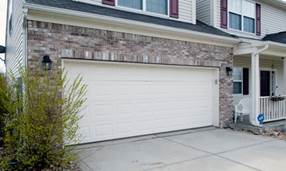
|
|
Example: Jason
Cotillion’s home is covered by a HO 00 08 policy with a Coverage A insurance
limit of $47,000. Jason struggles to pay his mortgage and maintain the home
so, since he uses public transportation and has no car, he decides on a way
to get financial assistance. He puts up a sign in front of his detached,
two-car garage that announces: “Good sized garage available for rent. Need parking,
office, or studio space? Call Jason today!” A couple of weeks later, half of Jason’s garage burns
down. The fire department finds evidence of matches and firecrackers, so they
suspect it was started by neighborhood children. The adjuster from Jason’s
insurer sees his rental sign and tells him there’s no coverage. After reading
his policy, Jason files a suit against the company saying that, since the
garage's use had not been altered while it was being offered for rent, it
shouldn’t be excluded from coverage. |
Business use that could disqualify
a structure from coverage includes using a structure to store business property
when that property is owned by either an insured or a tenant of the residence.
Eligible stored property does not include storage of liquid or gaseous fuels.
However, a limited exception exists for fuel contained within a fuel tank of a vehicle
or craft owned by an insured or a tenant.
3. The 10% of Coverage A
limit that applies to this section is separate coverage. Payment under this
section does not affect the protection available under Section A.
Coverage
C - Personal Property
1. Covered Property
Personal property
coverage is an additional amount of insurance that is typically written at 50%
of the limit used for the applicable dwelling. Coverage applies only while the
property is on the residence premises. At the insured's request, property of
others can be covered but only when it is located in a part of the residence
premises occupied by an insured.
2. Limit for Property at Other Locations
Property owned or
used by an insured is covered anywhere in the world for the greater of $1,500
(increased from $1,000 - 03 22 Change) or 10% of the specified personal
property coverage limit. This limitation does not apply to property located in a
newly acquired principal residence. The policy’s full Coverage C limit applies
to such property for 30 days immediately after an insured has begun to move his
belongings.
Neither does the
limitation apply to property at another location because the covered premises
is undergoing repair, rebuilding, renovation and is not suited for living in or
storing property. The order in referencing remodels, renovations and
rebuilds was slightly changed for clarity. (03 22 Change).
Related Court
Case: “Residence Location Held not to Include Temporary Motel Living”
3. Special Limits of Liability
Within the overall
amount of insurance for personal property, there are several monetary
limitations that apply to loss involving certain kinds of personal property.
The targeted property classes are usually high valued (or liquid) and
vulnerable to loss. Each of the following special sub-limits is the total
amount that can be paid in a single loss involving all property in the
described category:
a. $300 SUB-LIMIT
(03 22 Change)
This sub-limit increased from the 05 11 edition amount of
$200. It applies to the following:
Money, bank notes, bullion, gold, silver, platinum, coins
and medals, scrip, stored value, and smart cards.
Note:
This sublimit does not apply to dinnerware made from or coated with the listed
precious metals.
b. $2,000 SUB-LIMIT (03 22 Change)
This sub-limit increased from
the 05 11 edition amount of $1,500:
·
securities
·
accounts
·
deeds
·
evidences of debt
·
letters of credit
·
notes other than banknotes
·
manuscripts
·
personal records
·
passports
·
tickets and stamps.
Note: This sublimit applies
regardless the medium in which such property exists. In other words, both paper
and e-tickets are subject to the restricted coverage amount. Further, the limit
also includes costs associated with researching and recovering lost property.
c. $2,000 SUB-LIMIT (03 22 Change)
This sub-limit increased from
the 05 11 edition amount of $1,500:
·
watercraft of all types, including their
trailers, furnishings, equipment, and outboard engines or motors
d. $2,000 SUB-LIMIT (03 22 Change)
This sub-limit increased from the
05 11 edition amount of $1,500. It applies to:
·
trailers or semi-trailers not used with
watercraft of all types
e. $3,000 SUB-LIMIT
This sub-limit is changed in the
03 22 edition of the ISO Homeowners Program, from $2,500. (03 22 Change).
·
property, on the "residence premises,"
used primarily for "business" purposes
Note: This limitation only involves
property that is used PRIMARILY for any business purpose.
|
Example: The
Carsons’ home suffered loss due to a grease fire in the kitchen. Smoke damage
was extensive, including a loss of about $9,600 in furnishings and equipment
located in a converted bedroom. Scenario
1 – The room was converted into a game and recreation room. Under the HO 08
Modified Form policy, the Carsons’ full Coverage C insurance limit would be
available to handle the loss. Scenario 2 – The room was converted into a
home office, used primarily for Ms. Carson’s job as a day-trader. Under the
HO 08 Modified Form policy, total recovery is limited to $3,000. |
f. $1,500 SUB-LIMIT
This sub-limit is unchanged from the 05 11 edition of the ISO Homeowners
Program:
·
property, away from the "residence
premises," used primarily for "business" purposes
In
order for this sublimit to apply, the “business” use has to be primary. In
other words, the fact that a piece of property may, occasionally be used in
business will not make it subject to this limitation. However, if the property
involves electronic apparatus, this limitation is inapplicable IF such property
is used with audio or video equipment that is located in or on a motor vehicle.
These items are subject to limitations in items g. and h. below.
g. $2,000 SUB-LIMIT
This sub-limit is changed in the
03 22 edition of the ISO Homeowners Program, from $1,500. (03 22 Change).
·
loss to electronic equipment that is portable,
while in or upon a “motor vehicle,” but only if the electronic apparatus can be
powered from the vehicle’s electrical system. The equipment must transmit,
receive, or reproduce audio, data, or visual signals. Accessories are no longer
subject to this limitation. Instead, they are subject to item k. below.
Important,
the electronic item must be portable and can have multiple power sources as
long as one possible source is the motor vehicle.
h. $300 SUB-LIMIT
This item was introduced in the 05 11
edition. The coverage was
increased in the 03 22 edition from a sub-limit of $250. (03 22 change).
·
loss to tapes, records, disks, media, wires, and
antennas which are:
-
in or on a motor vehicle, and
-
used with equipment that must transmit, receive, or reproduce audio, data, or
visual signals.
Note: The above sub-limits apply to the
ENTIRE CLASS of property referenced.
Related
Article: Personal Articles Floater
i. $2,000 SUB-LIMIT
This sub-limit is introduced
with the 03 22 edition of the ISO Homeowners Program. (03 22 Change).
·
loss to aircraft that are deemed to be either a
model or hobby type that are incapable of carrying property or persons.
Note: The above sub-limits apply to the
ENTIRE CLASS of property referenced.
Most of the above
limits may be increased, at the option of the insured, by use of Coverage
C—increased special limits of liability endorsements. Various items of high
value may be insured for their full value by attachment of a scheduled personal
property endorsement.
Related
Article: Personal Articles Floater
4. Property Not Covered
Under
Coverage C- Personal Property, there are eleven categories of property that are
excluded from coverage. The excluded classes of property include:
a. Any property that is separately
described and specifically insured in this or other insurance.
This
exclusion is meant to prevent insureds from collecting twice for the same loss.
This exclusion states that it applies regardless of the amount of coverage
provided by any other source of insurance. Besides discouraging
“double-dipping,” this should encourage insureds to insure property under a
policy that is the most appropriate.
b. Animals, birds, or fish
While
homeowner programs offer liability for animals owned by insureds, they have not
offered livestock or animal mortality coverage.
c. Motor vehicles
This item has been slightly revised under
the 03 22 edition.
The
reference to motor vehicles applies to related equipment, and parts, but
such parts have to be located within or on a motor vehicle. (03 22 change).
This
does not apply to portable electronic equipment which can receive or transmit
data and are powered by the motor vehicle but can also use other power sources.
While this property is covered it is subject to a sublimit.
This
exclusion also does not apply to motor vehicles which are not subject to motor
vehicle registration and either of the following:
·
They have the single purpose of servicing an
"insured's" residence
·
The property is designed to assist the
handicapped.
Related
Court Case: ATV Injury Not Covered by Homeowners Policy
d. Aircraft and parts
The
policy defines aircraft as any contrivance that is used or designed for flight.
This property exclusion does not apply to hobby or model aircraft that is not
designed or used to carry people or cargo.
Note:
Even model or hobby aircraft that is capable of carrying persons or property is
excluded from coverage.
e. Hovercraft and parts
This
exclusion is for any self-propelled motorized ground effect vehicle, and
includes Flarecraft, air cushioned and similar vehicles.
f. This item was revised and reformatted in
the 03 22 edition. The policy’s protection does not extend to property that
belongs to:
(1) persons occupying the covered residence
under instances that meet the definition of a home-sharing agreement
(2) Other persons who, while not directly
involved in a home-sharing agreement, are using the premises because of
instances that qualify as home-sharing activities:
|
Example: Harmony rents her furnished, soundproofed basement to Jerry, a musician
who uses the location as a getaway to work on some songs for a music project.
Jerry is accompanied by a friend who is his partner that writes lyrics. While
Harmony is away from the home, a serious storm strikes the area causing
windblown debris to breach the home, damaging a lot of the basement’s
contents. Her policy should respond to the damage suffered to property
belonging to Jerry and his friend, even though the friend is not listed in
the home rental agreement. |
(3) This portion of the exclusion applies
to property that is owned by boarders, roomers and/or tenants. There is an
exception for such property owned by such persons who are an insured’s relatives.
(03 22 Change).
The purpose of this exclusion is to make sure
that the homeowner policy is stretched to protect persons who should buy their
own tenant’s or homeowners insurance. It preserves protection for property that
is used by the insured instead of giving full coverage to property is more
appropriately to be protected by another party’s own insurance.
g. Property that
(1) is located in any residential space which is actually rented to or that is
regularly reserved for use of a person that is defined as a “home-sharing
occupant.”
(2) furnishes an apartment regularly rented or held for rental to other persons
and that activity is performed by an "insured"
(This item was revised and reformatted - 03
22 Change.)
h. Any property that is possessed in order
to facilitate its use under contracts to share the space when transacted via,
essentially, smart phone applications or network platforms. (New defined term –
03 22 Change.)
i. Property that is either rented or held
for rental to others but only while off the "residence premises"
|
Example:
Jenna works from her home as a graphic artist who freelances for a number of
large advertising firms in her area. She constantly has to upgrade her
equipment. She has helped recoup her expenses by renting out her older
equipment to others. A renter’s home is burglarized and a rented printer was
also stolen. That property is not eligible coverage under Jenna’s HO policy. |
j. "Business" data
The
data can be stored in any of the following:
·
Books of account, drawings, or other paper
records; or
·
Computers and related equipment.
Related
Article: ISO Valuable Papers Coverage Form
Note: The cost of blank recording or
storage media, and of pre-recorded computer programs available on the retail
market is covered.
k. Credit cards, electronic fund transfer
cards or access devices used to withdraw, deposit or transfer funds.
This item no longer makes a reference to
former, additional coverage that provided a modest amount of protection for
such value cards. (03 22 Change).
l. Water or steam
The
intent of this exclusion appears to prevent coverage of the expense of water utility
service from the policy.
Coverage
is not granted for electronic or computer-generated, currency, including
cryptocurrency and it applies regardless how the various currencies are named.
(Defined term, newly added - 03 22 Change.)
Note:
Digital currency refers to fiat (government-backed and issued) currency, such
as digital U.S. dollars, digital euro, etc. Cryptocurrency is privately owned
electronic money that is encrypted and protected via blockchain technology.
n. A variety of products and
substances are deemed ineligible property. The exclusion applies to the
following:
(1) Controlled Substances -
refers to items, including chemicals, mixtures and compounds that are described
under the U.S. Federal Food and Drug Law.
(2) Cannabis even when not
categorized as a controlled substance (such as various narcotic drugs)
However, exclusion n does not
apply to items (3) or m (4) below.
(3) Prescription Drugs –
medicines acquired via a licensed health care professional and which are used
according to applicable directions (dosage, frequency, and circumstances, such
as with or after a meal).
(4) Hemp Derived Goods and Products
Coverage still applies to items
made from or containing hemp (which does not contain hallucinatory effects).
Clothing, food, seeds, extracts, oils, lotions, materials, and paper are
examples. However, the exception is removed (exclusion is applied) if their use
violates local or state laws, codes, regulations, etc.
(Defined
term, newly added - 03 22 Change.)
1.
Coverage D - Loss of Use
This
portion of the Modified Form policy provides coverage for Additional Living
Expenses, Fair Rental Value and Civil Authority. The insurance limit that
appears for Coverage D is the total amount that applies to all three coverages.
Specifically, Coverage D provides:
1. Additional Living Expenses
If
a covered loss makes the insured premises unusable, this coverage pays an
insured’s expenses which are beyond his or her normal living expenses.
Note: The extra expenses must involve
the cost of maintaining an insured’s normal way of life.
|
Example: Consider these situations: |
|
|
Likely Covered |
Likely Not Covered |
|
The
added cost of renting a modest hotel room (for a married couple) |
The
added cost of renting a luxury suite (for a family of two) |
A time limit controls the payment of these
expenses. Payment will last until the damaged property is repaired or
replaced, or until the household has found a new, permanent residence,
whichever occurs first. This part of the additional coverage was slightly
edited, likely in an attempt for more clarity. (03 22 Change)
Related Court Case: Additional Living Expenses Held Not Recoverable
Following Contamination
2. Fair Rental Value
This
coverage pays an insured the fair rental value of the part of the
"residence premises" which the insured rents out or holds for rental.
Any payment is reduced by any expenses which cease while the residence can’t be
used.
Of
course, the home must first be made unavailable or unlivable by a covered cause
of loss.
Payment under additional living expenses or
fair rental value will be for the shortest
of the time required to repair or replace the damage to property. This
part of the additional coverage was slightly edited, likely in an attempt for
more clarity. (03 22 Change).
3. Civil Authority Prohibits Use
If
a civil authority prohibits the "residence premises" from being used
as a result of direct damage to neighboring premises by a covered cause of
loss, the additional living expense and fair rental value loss as provided
under additional living expenses and fair rental value is covered for a maximum
of two weeks.
|
Example: The
home adjacent to an insured collapses due to it having been abandoned for
years. A city inspector orders the
insured’s household to leave the area until the damaged home can be leveled
and cleared. The maximum time that the policy will pay for is two weeks to live
elsewhere. Beyond two weeks, the additional costs of temporary living
arrangements become an out-of-pocket expense. |
The
coverage periods extended under additional living expenses, fair rental value,
and civil authority are not limited by the expiration date of the policy.
Note:
This is another issue that may be affected by the ongoing pandemic. Many losses
were created by the actions of local and state governments affecting the legal
use of personal and commercial property. It is highly likely that this issue
will be redefined.
4. Loss or Expense Not Covered
This section of the HO 08, oddly in our opinion, appears
like the other three items; but it is NOT an additional coverage. It states
that the policy does NOT provide reimbursement for loss related to the
termination of a lease or other agreement. While this appears to be an attempt
to provide greater clarity, the trade-off is distinctly listing an exclusion in
the form of an additional coverage under Loss of Use.
Related Article: Loss of Use Coverage
Related
Article: Loss of Use Coverage
The policy language advises that
the ending of a given policy period does not affect the application of these
coverages under a given loss.
Additional Coverages
The following categories of protection are also available
under the HO 08 Form.
Note: Unless
otherwise stated, the coverage amounts that appear in this section are
unchanged from previous editions of the Modified Form Policy.
1. Debris Removal
a.
Reasonable expenses will be paid for the removal of the following:
·
Debris of covered property if an insured peril
that applies to the damaged property causes the loss
|
Example: Marva
returns to her storm-damaged home. The primary loss was to her front porch,
including a large amount of porch debris that covers the front lawn. Debris
Removal coverage would respond to the cost to clear the property. |
·
Ash, dust, or particles from a volcanic eruption
but only if they caused direct loss to a building or to property that is within
a building.
This
coverage is a part of the limit of insurance that applies to the damaged
property. If the sum of the amount paid for actual property damage and the
debris removal exceeds the limit of liability for the damaged property, an
additional 5% of that limit of liability is available for debris removal
expense.
·
The named insured’s trees which are destroyed by
windstorm or hail
·
The named insured’s trees which are destroyed by
weight of ice or snow
·
Trees belonging to an insured’s neighbor which
are blown over or around by an insured peril under Coverage C
However,
the trees must cause one or more of the following:
-
Damage to a covered structure
-
Block a driveway enough to prevent registered motor vehicles from entering or
leaving the premises
-
Block a ramp or passage that eliminates a handicapped person’s access to the
dwelling.
The coverage amount is
modest, offering some protection to events that are commonplace. While the
increased coverage helps, it would still be quite inadequate at a site where
debris consists of a large number of felled trees.
2. Reasonable Repairs
The policy pays for costs the
insured faces to make temporary repairs that minimize or prevent further damage
to property, but only if affected or threatened by a source of loss that is
eligible for coverage under the HO 08 policy. This coverage reduces the
policy’s applicable property insurance limit. Further, it does not affect any
obligation under the policy’s “Duties After a Loss” condition.
3. Trees, Shrubs and Other Plants
Specific
perils are covered for trees, shrubs, plants, or lawns on the “residence
premises.” These perils are:
·
Fire or lightning
·
Explosion
·
Riot
·
Civil commotion
·
Aircraft
·
Vehicles not owned or operated by residents the
insured household
·
Vandalism
·
Malicious mischief
·
Theft
For
all trees, shrubs, plants, or lawns, coverage is available for up to 5% of the limit of liability that
applies to the dwelling.
No more than $1,500 (increased from previous
limit of $500 - 03 22 Change) of this limit will be available for
any one tree, shrub, or plant. However, this is an ADDITIONAL amount of
insurance. Payment under this additional coverage does not affect the insurance
limits that apply to other covered property. Additionally, it is important to
remember that there is NO coverage for property grown for "business"
purposes. This form now makes specific reference to property grown as part
of business activity or cannabis. Neither class of property is eligible for
coverage. (03 22 Change).
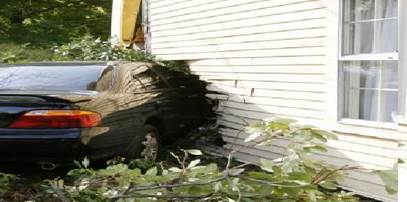
|
Example: Gail
heard a loud thump and she rushed outside. An elderly neighbor lost control
of her car and ran onto Gail’s property. She crashed into the wood stairs to Gail’s
home’s entrance. Unfortunately, the crash also destroyed hundreds of dollars
of exotic plants that were to be sold at her family’s |
|
4. Fire Department Service Charge
Fire department service charge
coverage applies only to property located outside of recognized fire districts.
The coverage clearly does not apply to property that is located within the
limits of the city, municipality or protection district that furnishes the fire
department response. The $500 reimbursement allowance, when applicable, pays
for calling the fire department to protect property from any covered peril not
restricted to fire. This limit is additional insurance.
5. Property Removed
This protection exists for
eligible property that is taken off-premises in order to protect it from likely
damage of loss from an insured peril. The policy’s limits for the removed
property apply to this property for up to 30 days from the date of removal. The
removed property is covered for any source of loss during this time period.
Since this is merely an additional peril, it makes the policy’s protection
broader, but does not provide additional insurance limits. Any loss paid under
this cause of loss reduces the total amount of protection available. There
is a clarification in policy wording, referencing “increase” in place of
“change” in limits. (03 22 Change).
Previous editions of the ISO HO Special Form Policy used to have an
Additional Coverage called “Credit Card, Electronic Fund Transfer Card or
Access Device, Forgery, and Counterfeit Money.” This item was deleted. (03 22
Change).
6. Loss Assessment
a.
The insurance company will pay up to $2,000 for “your” share of a loss
assessment charged during the policy period against you by a corporation or
association of property owners. (Increased from previous limit of $1,000 - 03
22 Change) The assessment has to be due to a direct loss to property that
is collectively owned by all members. Further, the loss that triggers the
assessment has to be caused by a covered peril under Coverage A Dwelling.
|
Example: Paula
and Lanie live in an older neighborhood that includes a commonly owned
recreational area and clubhouse. They are required to belong to the
homeowners association that oversees the joint-owned property. During a
severe period of rain, flooding destroys the clubhouse. Even though the
association has a flood policy, it doesn’t pay the entire loss. Paula and
Lanie, along with the other homeowners in the association, are assessed
$3,700 to pay for the remaining cost of repairs. While their homeowner’s
policy has $2,000 available for assessments, it does not apply here due to it
involving a form of loss that is not covered by their policy. |
Ineligible Assessments - This
additional coverage excludes protection against loss due to earthquake and also
due to any land shock waves or tremors occurring occur before, during or after
a volcanic eruption.
b.
No coverage is available for assessments made against an insured or a
corporation or association of property owners by any governmental body.
This
coverage applies only to loss assessments charged against “you” as owner or
tenant of the "residence premises."
Regardless of the number
of assessments, $2,000 is the maximum amount that will be paid for a
single occurrence. This insurance is subject to the policy deductible that
appears on the declaration page. However, regardless of the number of eligible
assessments in a single occurrence, the deductible only applies once.
c. Section I Condition Q. Policy
Period does not apply to this coverage which means that the loss that causes
the assessment is not required to occur during the policy period.
7. Glass or Safety Glazing Material
a. This additional coverage pays for
any of the following:
·
Glass or safety glazing material breakage but
only if it is part of a covered building, storm door or storm window
·
Glass or safety glazing material breakage but
only if it is part of a building, storm door or storm window AND the direct
cause of loss is earth movement
·
Covered property that suffers direct damage from
glass or glazing material that breaks out of storm doors/windows or other parts
of the covered building
b. This coverage does not include loss
on the "residence premises" if the dwelling has been vacant for more
than 60 consecutive days immediately before the loss. However, if the vacant
building is damaged by earth movement coverage does apply. There is an
important exception, A dwelling being constructed is not considered vacant. Vacant
status is also inapplicable to homes that are not actively occupied because of
remodeling, renovations, or repairs. (03 22 Change).
Further,
this provision does not cover loss that results from the openings that exist
after glass or glazing material has broken. This wording merely prevents
duplicate coverage with protection that may exist under other parts of the
policy.
c. This coverage grants a maximum of $200
of protection. (Increased from previous limit of $100 - 03 22 Change).
d. This coverage does not increase the
limit of insurance that applies to the damaged property.
SECTION I—PERILS INSURED AGAINST
The
insurer’s obligation is to protect eligible property for the sources of loss
listed below. That protection is provided to the property described under
Coverages A, B and C. However, this section also references that protection is
subject to this form’s separate exclusions section.
1. Fire or Lightning
Related
Article: Dwelling Policy Program Perils
Related
Court Case: Business Property Sublimit Held Applicable in Fire Loss
2. Windstorm or Hail
While
coverage for wind and hail loss extends to watercraft, outboard engines, trailers,
and related property, it only applies when damage occurs while this property is
located in a building that is entirely enclosed.
Further,
damage to property located within a building is covered only due to the direct
force of wind that breaches the structure and permits damage to the contents.
In other words, damage due to an open window or door is disqualified from
coverage.
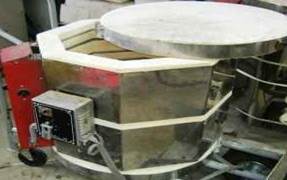
|
Example: Olivia
reports a loss in which storm winds destroyed the contents of her studio. All
of her pottery supplies and furniture were damaged and broken. Her insurer
sends an adjuster who inspects the loss and turns the claim down. He noticed
that the room’s window had been left open. |
|
Related
Article: Dwelling Policy Program Perils
3. Explosion
|
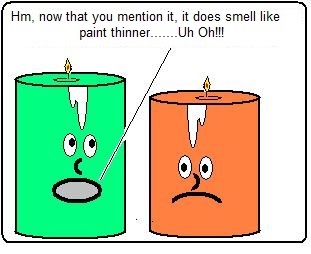
Example: Olivia
is having a bad time. She returns home from a long walk-in time to meet a
firefighter who explains they responded to an explosion at her home. They put
out a fire and the damage was pretty extensive. It turns out that the scented
candle she lit reacted to paint thinner fumes from her painting project. At
least the damage to her bungalow is covered. |
|
Related
Article: Dwelling Policy Program Perils
4. Riot or civil commotion
In
other words, this is basically vandalism coverage involving groups.
Related
Article: Vandalism, Riot or Civil Commotion–A Discussion
5. Aircraft
With
the increasing incidences of small aircraft crashing in towns and city
neighborhoods, this coverage is becoming more necessary. This coverage also
applies to damage caused by spacecraft and self-propelled missiles.
6. Vehicles
Damage to a fence, driveway or
walkway created by a vehicle owned by a resident of the insured household is
ineligible for coverage.
7. Smoke
The
policy only covers for smoke losses that qualify as being both accidental and
sudden, but bars coverage for loss that is due to smoke from, fireplaces,
industrial operations as well as agricultural smudging.
Eligible
smoke damage includes a situation called “puffback.” Puffback is when a
furnace, boiler or similar equipment releases soot, smoke, vapors, or fumes
onto the covered property and causes damage.
8. Vandalism or malicious mischief
However, a change was recently made to this
coverage. No protection is available for damage or loss that is related to
home-sharing host activities (as defined in the policy). (03 22 Change).
This
source of loss does not apply to either direct or indirect damage that results
from any related, deliberate act if, at the time of loss, the property has been
vacant more than 60 days. A home under construction, remodeling, renovating
or repairs (03 22 Change) is not classified as a vacant home.
This coverage has, traditionally, occurred on
the nuisance level and is often a loss handled by the homeowner as it does not
rise above policy deductibles.
9. Theft
This
is very modest coverage because the limit of loss for theft is only $1,000.
a.
The theft peril includes attempted theft and property that is no longer located
at a given place when its disappearance is likely caused by its theft.
b.
There are several instances that are excluded from coverage, such as when the
theft or loss:
·
Is committed by an “insured”
·
Occurs to or in a dwelling that is under
construction
·
Involves materials and supplies used for the
construction of a dwelling before the structure is completed and occupied (as a
residence)
·
Occurs in a part of a “residence premises” which
an “insured” rents out to someone other than another insured
·
Occurs away from the “residence premises”
Under
this peril only any personal property in a bank, public warehouse or self
storage facility is considered to be on the residence premises.
10. Volcanic eruption
Other than loss caused by
earthquake, land shock waves or tremors.
SECTION I—EXCLUSIONS
The following sources of loss are excluded from coverage
under the HO 08 form.
Note: The
exclusions apply whether the loss is direct or indirect.
1. Ordinance or Law
There is no coverage for loss due
to the enforcement of any ordinance or law regulating the construction, repair,
or demolition of a structure. This exclusion also refers to laws involving
monitoring, testing and/or remediation of property due to polluting activity.
Building codes amended or enacted
after the original construction of a building are a major reason for this
exclusion. In some areas, laws prevent the repair of a building that has
suffered damage equal to 50% or more of its value. The HO 08 form is not intended
to cover the substantial costs to bring a building within compliance with local
laws, especially when an insured may be required to demolish the remains of
their covered property and rebuild.
Related Court Case: Building Code Upgrade Requirements Held Not Covered in Hurricane Andrew
Rebuilding
2. Earth Movement
Earth
movement is defined as an earthquake and includes land shock waves or tremors
that occur before, during or after a volcanic eruption; landslide; mine
subsidence; mudflow; earth sinking, rising, or shifting. This source of loss is
excluded regardless of whether it is connected to human, animal or natural
(force of nature) activity.
There
is an important element of this exclusion. If a fire, theft, or explosion
occurs after any earth movement, the policy will pay for the damage caused by
the subsequent loss. However, any damage resulting from earth movement would be
excluded from any payment made to care for theft, explosion, or fire damage.
Note: Such events are often referred to
as ensuing losses.
3. Water
The
Modified Form policy does not cover a loss caused by flood, surface water,
waves, tidal water, tsunami, overflow of a body of water, or spray from any of
these, whether or not driven by wind; water which backs up through sewers or
drains or which overflows from a sump; or water below the surface of the
ground, including water which exerts pressure on or seeps or leaks through a
building, sidewalk, driveway, foundation, swimming pool, or other structure.
This source of loss is excluded regardless of whether it is connected to human,
animal or natural (force of nature) activity.
The
excluded situations mentioned above also extend to damage caused by waterborne
material. So, a distinction may possibly be made among damage caused by water
and damage caused by items borne (carried) by water. The reference, allegedly,
is intended make the exclusion definitive in barring coverage for damage caused
by debris-laden water or sewage. However, the latter item may beg the question
of how such distinctions should be made. Is sewage synonymous with waterborne
material? If not, the added wording, rather than clarifying the exclusion,
could create confusion.
Direct loss by fire, explosion or theft
resulting from water is covered.
Besides excluding damage
from water and waterborne material, coverage is also barred from water (and
material carried by water) that escapes or overflows from any containment
system. The systems referenced in the form include:
·
Dams
·
Levees
·
Seawalls
·
Other
boundaries
·
Other
containment systems
Questions arise about what is
meant by ‘surface water’ since this source of loss is not covered. This term
applies to water that stands or runs on the surface of the ground. It includes
rainwater, which forms in pools or otherwise collects on the ground. It also
encompasses similar conditions created by garden hoses and irrigation systems.
4. Power Failure
The HO 08 form bars coverage for
loss caused by power failure. It refers to the failure of power or other
utility service if the failure takes place off the residence premises. However,
if a covered peril occurs following the power failure and that peril damages
the residence premises, the policy will pay for the portion of the loss caused
by the ensuing peril.
It is clear that the exclusion
would apply if power failure were caused by damage to a power station or
utility equipment away from the premises. But if, for example, lightning struck
and damaged wiring on the insured premises, the exclusion would not apply, and
the policy would pay for damage to covered property resulting from power
failure caused directly by the lightning.
5. Neglect
Neglect refers to an insured who
does not use all reasonable means to save and preserve property at and after
the time of a loss. This exclusion underscores the insured's obligation to
protect property that may have been damaged by a covered peril. While the
insured is expected to take reasonable steps to protect his property, heroic or
dangerous action is not expected.
|
Example: Insane
Insurance reduces the Porters’ claim because, when they returned home from a
night out and found it engulfed in smoke and flames, they refused to enter
the house to save a kitchen table. On advice of its own in-house counsel,
Insane later sent an additional check to cover the lost table too. |
|
Related Court Case: Neglect to Protect Exclusion Held Not Applicable to Mailing of Ring by
Certified Mail
6. War
This
term includes undeclared war, civil war, insurrection, rebellion, revolution,
warlike act by a military force or military personnel, destruction or seizure
or use for a military purpose, and any consequence of any of these actions.
Discharge of a nuclear weapon is deemed a warlike act, even if accidental.
7. Nuclear Hazard
Nuclear hazard means any nuclear
reaction, radiation, or radioactive contamination, controlled or uncontrolled
or however caused, or any consequence of any of these acts. It is clear,
however, that direct loss by fire resulting from the nuclear hazard is covered.
8. Intentional Loss
This exclusion applies to loss
caused by and intended by an insured and denies coverage for ALL insureds when
ANY insured commits an intentional loss.
|
Example: A
married couple jointly owns a home that is insured for $40,000 under a HO 08.
Angry over not winning the state lottery, the wife (without her spouse’s
knowledge) sets fire to their home, causing $25,000 in damages. Since the
loss was not accidental, both the guilty wife and the innocent husband are
barred from making a claim for the extensive fire damage. |
Note: The above scenario could be resolved differently depending
upon the state where the incident occurs. Some state laws preserve the rights
(insurable interests) of innocent parties (typically spouses).
9. Governmental Action
This exclusion applies to loss
caused by any governmental unit’s decision to destroy or confiscate property,
with the exception for property destroyed in order to guard against the spread
of fire.
SECTION
I– CONDITIONS
Note: These conditions appear in the policy, but they
are not discussed in the order of their appearance.
A. Insurable Interest and Limit of Liability
Regardless
of the number of people who have an insurable interest in the property covered,
the insurer is not obligated to pay more than either the affected insured’s
property interest or the applicable insurance limit.
B. Deductible
This provision stipulates that any
loss is subject to any applicable, stated deductible that appears in the
policy. If a situation appears where more than one deductible could, technically,
be applied, only the highest deductible amount will be used when settling a
loss.
C. “Your” Duties After Loss
In
case of a loss to covered property, the “insured” is responsible for:
1. Quickly notifying the insurance
company or its agent
|
Example: On May
3rd, the Turners’ home was burglarized with most of the lost items
involving electronics and musical instruments. On June 21st, the
Turners file a claim with their agent. The agent quickly forwards the
information to their insurer but warns them that the late notification may
endanger any payment. |
2. Reporting theft losses to the proper
authorities
3. Protecting the property from further
damage. If repairs to the property are needed, the insured is required to take
reasonable steps and necessary repairs to protect damaged property, recording
all repair expenses
4. Cooperating with the insurance
company as it reviews the claims
5. Preparing an inventory of damaged
personal property, including items that documents property values and includes
detailed property descriptions
6. Displaying any damaged property,
sharing all records and documents related to the loss and participating in and
signing examinations as many times as an insurer requests.
7. Providing a signed, sworn proof of
loss within 60 days following an insurer’s request. The proof of loss needs to
describe the following:
·
The time of loss
·
The cause of loss
·
The interest of the "insured" and all
others in the property involved
·
The parties which have liens on the property
·
Information regarding any other insurance which
may cover the loss
·
The details of any changes in title or occupancy
of the property during the term of the policy
·
Any specifications of damaged buildings and
detailed repair estimates
·
The inventory of damaged personal property as
described in the inventory described in “Your Duties After Loss” section
·
Valid receipts for additional living expenses
incurred and records that support the fair rental value loss
Section C., Duties After Loss, no longer
contains references of obligations involving credit card, electronic fund
transfer card or access device companies. (03 22 Change).
D. Loss Settlement
1. If a covered loss occurs to:
·
Personal property
·
Awnings, carpeting, household appliances,
outdoor antennas, and outdoor equipment, and
·
Structures that are not buildings,
all are settled on the basis
of the property’s actual cash value that exists at the time of the loss UNLESS
it is less expensive to repair or replace the damaged or destroyed property.
Note: The actual cash value is the replacement cost of the item
minus depreciation. If your client has a 10-year-old sofa that is destroyed in
a fire, the insurance company won’t just write out a check for the value of a
new sofa. The purpose of insurance is to make an insured whole again,
re-establishing their pre-loss position; it is not to improve an insured’s
financial position.
2. If a covered loss occurs to a building described under Coverage
A or Coverage B, the settlement depends upon the insured’s choice on making a
claim:
a. If the damaged property is, through
repair or replacement, restored to the same occupancy and use, the policy will
pay either the applicable limit of insurance or the actual amount needed to
repair or replace the property. However, the insurer has the option to use
common construction materials that are the functional equivalent of the damaged
property.
The repair
or replacement has to occur within 180 days after the loss.
b. If the insured does not repair or
replace the damaged property within 180 days, the insurer will pay the least of
the applicable insurance limit, the market value of the property (at the time
of loss) or the amount needed to repair or replace the damaged property using
material of like kind and quality (subject to depreciation).
Related
Court Case: Depreciation Held Warranted When Damage Is Not Repaired
E. Loss to a Pair or Set
When
property that is part of a pair or set suffers a covered loss, the insurer can
choose to settle on one of the following basis:
1. Repair or replace any component that
results in returning the pair or set to its pre-loss value
2. Pay the amount equal to the pair or
set’s pre-loss and post-loss actual cash value
F. Appraisal
Either
an insured or the insurer can require a loss appraisal if they can’t agree on
the amount of loss. The two parties have up to 20 days after getting an
appraisal request to select a competent appraiser. The appraisers have a
maximum of 15 days to choose an umpire. If an umpire isn’t found by that time,
a judge of a court of record in the state where the "residence
premises" is located can make the selection. Each appraiser has to submit
a written loss amount and both the insurer and insured are bound to accept an
agreement among any two of the appraisers and the umpire. Each party will pay
its own appraiser and share the other appraisal expenses (including the cost of
the umpire) equally.
Related
Court Case: Insured Not Entitled to Specific Performance of Appraisal
Provision
G. Other Insurance and Service Agreement
If
a loss covered by this policy is also covered by other insurance, the insurer
will pay only their share of the loss. Their share equals the percentage of
coverage the insurer provides, compared to the total amount of coverage that
applies to the loss. If a loss covered by this policy is also covered by a
service agreement (even one that operates similarly to insurance), this policy
responds only on an excess basis.
Note: This condition only refers to
other coverage but does not specify whether the other source has to be valid
and collectible. Therefore, a dispute could arise depending upon how this
condition is exercised.
|
Example: Fran
Weekwill’s newly purchased home is covered by a HO 08 policy. Fran is moving
into her home with the help of the moving company she hired, Olde Paradigm
Movers. Fran’s porch and porch roof are destroyed when the Olde Paradigm
truck driver backs up too fast and slams into the front of her home. Olde
Paradigm has a general liability policy with limits of $50,000. Fran’s policy
has a limit of $50,000 on her dwelling. The damage to her property is
estimated at $6,000. Fran’s insurance company pays Fran $3,000 for the loss
and tells her to collect the rest from Olde Paradigm, even after the insurer
discovers that Olde Paradigm’s insurer is bankrupt and is unable to honor
their policy. While Fran argues that no other collectible coverage applies to
her loss, her insurer says that another source of coverage did, technically,
apply to the loss and it doesn’t matter if the coverage lapsed. |
H. Suit Against Us
The
insured may not file legal action against the insurer unless and until he or
she has complied with all of the applicable policy provisions. Further, the
action must be filed no later than two years after the date of loss.
Note: This
provision does not prevent a policyholder from suing his or her insurance
carrier. The intent of this provision is to make certain that an insured takes
every course of action that is available and to use a lawsuit as a last resort.
It should be to everyone’s advantage if conflicts can be resolved without
having to go to court. However, suits happen and if this alternative is chosen,
the insured must file the action within one year of the applicable date of
loss.
I. “Our” Option
If
the “insured” is given written notice within 30 days after the insurance
company receives the “insured’s” signed, sworn proof of loss, the insurance
company may repair or replace any part of the damaged property with similar
property.
Note: The insurer is not obligated to
pay a loss with cash. The insurance company can actually replace the damaged
property with similar property.
J. Loss Payment
Any
losses will be adjusted between the insurer and the insured and payment will be
made to the insured except when the payment is due to another person or party.
The insurer is obligated to make payment within 60 days after it receives the
proof of loss. However, this depends upon the insurer reaching an agreement
with the insured and, naturally, is affected by receiving either an entry of
final judgment or a filing of appraisal award.
K. Abandonment of Property
The
insurer is not obligated to accept any property that an insured abandons.
L. Mortgage Clause
When
the policy names a mortgagee (including trustees), any payments made under Coverages
A or B will be paid to the mortgagee and the insured, according to their
interest in the covered property. Multiple mortgagees are paid according to
their order of precedence (i.e., 1st Mortgagee, 2nd
Mortgagee, etc.).
A
claim denial to an insured won’t affect a mortgagee who:
·
Notifies the insurance company of any known
change in ownership, occupancy, or substantial change in risk,
·
Pays any premium when it’s not paid by an
insured, and
·
Provides a signed, sworn statement of loss
within 60 days after being told that one hasn’t been provided by an insured.
Policy
conditions relating to appraisal, suit against us and loss payment apply to the
mortgagee.
The
mortgagee will get at least 10 days’ notice that the policy is cancelled or not
to be renewed.
When
an insurer pays a mortgagee, but not an insured, the insurer may assume the
mortgagee’s subrogation rights against an insured and subrogation won’t damage
the mortgagee’s right to fully recover its claim.
M. No Benefit to Bailee
The
insurance company will not recognize any assignment or grant any coverage that
benefits a person or organization holding, storing, or moving property for a
fee regardless of any other provision of this policy.
N. Nuclear Hazard Clause
Nuclear
hazard is defined as any controlled or uncontrolled nuclear reaction,
radiation, or radioactive contamination, including consequential losses. Such
nuclear incidents will not be considered as fire, explosion, or smoke losses.
However, there is coverage for direct loss by fire which results from a nuclear
hazard.
O. Recovered Property
When
either the insured or the insurer recovers property after a claim has been
paid, the other party has to be told about the recovery. The two parties will
discuss who is to keep the property and, if applicable, any adjustments that
have to be made to the settlement.
|
Example: Paula
received full reimbursement for all of the furniture and other items stolen
during a burglary. When her insurance adjuster tells her that a half dozen
items were recovered, she only asks that a chest of drawers that belonged to
her grandmother be returned. The insurer returns it and asks her to repay a
portion of the settlement. |
P. Volcanic Eruption Period
Within
a 72-hour period, all volcanic eruptions that occur will be treated as one
eruption.
Q. Policy Period
This
item merely states that the coverage supplied by this policy is only valid for
loss that actually occurs during the applicable policy period.
R. Concealment or Fraud
This
provision voids coverage for all persons otherwise eligible for protection if
the insurer discovers any incidents of significant information being kept from
it (either due to concealment or misrepresentation). Loss of coverage also
results if any otherwise covered persons are guilty of fraudulent behavior or
lying (false statement) regarding any aspect of the applicable insurance
coverage.
The
provision attempts to be comprehensive, barring coverage to all parties,
including innocent insureds. However, the provision wording may likely cause
confusion over how it applies and appears to be vulnerable to court scrutiny in
the event of claims.
S. Loss Payable Clause
Whenever
a loss payee appears on the policy, that party gains status as an insured and
is due proper/required notice of policy termination.
SECTION II - LIABILITY COVERAGES
A. Coverage E - Personal Liability
This
coverage obligates an insurance company to provide coverage for bodily injury
or property damage caused by an occurrence. Of course, what is meant by
property damage, bodily injury and occurrence is defined by the Modified form
policy. If the loss does qualify for coverage, the policy (through the insurer
writing the coverage) will:
1. Pay up to the policy’s insurance
limits for the damages for which an "insured" is legally liable.
Eligible damages include prejudgment interest levied against an
"insured."
2. The Modified form policy also will,
at the insurer’s expense, defend an insured. The defense is provided even when
there are no grounds for the lawsuit or even when the suit was falsely or
fraudulently filed. The insurer has the right to choose the legal
representative.
|
Example: Glenda
and her family love music. She happily lets her daughter’s punk rock band
practice at her house. Her neighbor, who constantly complains about the noise,
sues Glenda, claiming that the noise is causing cracks in his home. Her
insurer defends against the nuisance “property damage” claim. |
|
Along
with its obligation to defend and, if necessary, pay a lawsuit, the insurer has
complete power in investigating and settling claims as it decides is
appropriate.
Once
the insurance policy’s liability limit has been used up by either a settlement
or a judgment, the insurer has no further obligation to provide a legal defense
to the insured. The defense obligation ceases when a payment of a judgment or
settlement exhausts the policy’s applicable insurance limit.
B. Coverage F - Medical Payments to Others
The
insurance company will pay the necessary medical expenses that are incurred or
medically ascertained (determined) but only those incurred within three years
from the date of an accident that causes “bodily injury.” Medical expenses
include reasonable charges for:
|
medical
|
surgical
|
x-ray |
|
dental |
ambulance |
hospital |
|
professional
nursing |
prosthetic
devices |
funeral
services |
This
coverage part refers to necessary medical expenses and, in defining medical
expenses, refers to reasonable charges. Therefore, in order for a charge to be
paid under Medical Payments to Others, the charge has to be the result of
accidental “bodily injury” covered by the policy and the charge has to be for a
reasonable amount. There is no coverage for either unnecessary charges, even
when they’re reasonable, or for necessary treatment that is performed for
exorbitant fees.
The
policy’s Medical Payments to Others coverage does not apply to “you” or regular
residents of “your” household except "residence employees." With
regard to others, this coverage applies only to:
1. a person on the "insured
location" with the permission of an "insured"
2. a person off the "insured
location," if the "bodily injury" arises out of any of the
following:
a. A condition on the "insured
location" or the ways immediately adjoining
b. Circumstances caused by the
activities of an “insured”
c. Circumstances caused by a
"residence employee" in the course of the "residence
employee's" employment by an “insured”
d. Circumstances caused by an animal
owned by or in the care of an "insured."
|
Example: Rhea
is having a party to watch a basketball playoff game. It’s attended by
friends and family. While rushing in from the kitchen to see the replay of a
winning basket, Rhea’s son collides with her neighbor and both suffer broken
ribs. The neighbor’s injury is eligible for coverage but the son’s is not. |
|

SECTION II - EXCLUSIONS
This section addresses exposures which ARE NOT covered by
the homeowner policy’s liability coverage part. A policy’s exclusion section is
typically the most difficult to comprehend. As more consumers are exposed to
the simplified shortcut writing used on computers and mobile devices;
expectations on understanding such common forms may force future language
changes.
The first four exclusions are self-contained and feature
vehicles or crafts.
A. “Motor Vehicle Liability”
1. The Modified form coverage parts
Coverage E - Personal Liability and Coverage F - Medical Payments to Others do
not protect an insured against an “occurrence” related to “motor vehicle
liability” when the loss involves:
a. A motor vehicle which is actually
registered to be used on public roads or property.
b. Vehicles that are not registered for
public road use but that are required by the governmental authority to be
registered. The registration requirement is determined by the location where
the place where the occurrence happens.
c. Coverage is also excluded when the
“motor vehicle” (as defined by the Modified form policy’s definition section)
meets any of the following conditions:
(1) Used in an organized or prearranged
race, speed contest or other competition, including or preparing for the race
Note: Since this exclusion refers to
prearranged or organized events, it would appear that a spontaneous event, such
as a drag race, might be covered. Of course, such a race would have to involve
vehicles that aren’t excluded by other parts of the policy.
(2) Rented to other persons
(3) A vehicle whose owner charges a fee
to carry persons or property
|
Example:
Wendell lives in Sunnygreen retirement community where golf carts are used to
travel the community’s roads. Wendell makes extra money by owning two golf
carts that he rents to other residents. Losses involving these carts are
ineligible for coverage. |
(4) A vehicle that is used in a
“business,” with the exception of a motorized golf cart while it is being used
on a golfing facility.
2. If a vehicle fails to fall under
exclusion A.1, a motor vehicle is
still not covered EXCEPT when the vehicle meets one or more of the following
conditions:
a. It is on an “insured location” and
in dead storage
b. Only used in connection with
maintaining an “insured’s” residence
c. Riding mowers when in the course of
cutting grass when a loss occurs. (03 22 Change)
d. It is made for use by handicapped
persons and the loss occurs when either of the following is true:
(1) The vehicle is assisting a handicapped
person
(2) The vehicle is parked on an
“insured location”
Note: Even if a vehicle such as a
motorized wheelchair is involved in a loss, the loss is not eligible for
coverage UNLESS the wheelchair is ASSISTING a handicapped person or is parked.
|
Example: |
e. A recreational vehicle that is MADE
as a recreational vehicle to be used off public roads AND one or more of the
following apply:
(1) The vehicle is NOT owned by an
insured
(2)(a) The vehicle IS owned by an
insured, but the loss occurs on an insured location. The insured location must
qualify as such under the policy’s definition.
(2)(b) The vehicle IS owned by an
insured, but the loss occurs away from an insured location. However, this
off-location protection is quite narrow. It applies only when the loss involves
a vehicle that is designed as a toy for and used by young children (6 years and
younger), is battery-powered and is incapable of moving faster than 5 mph on
level ground. In other words, the policy responds to, essentially,
preschooler-operated toy losses.
Note: The 5-mph restriction applies
whether the motorized toy’s speed capability was provided by the manufacturer
or is due to later modification.
Of
course, though the coverage is narrow, it is still valuable that the Modified
form policy could respond to hazards caused by certain motorized property.
f. A motorized golf cart which is owned
by an insured and which is built for carrying four or fewer persons and is not
capable of traveling faster than 25 mph on level ground.
Further,
the golf cart MUST be operated within the legal boundaries of the following:
(1) A golfing facility at which the
golf cart is either kept or is being used by an insured to do any of the
following:
(a) Play golf or some other activity
sanctioned at the facility (interesting, what if golf cart races were
sanctioned?)
(b) Ride between the areas where golf
carts or motor vehicles are parked or stored
(c) Cross public streets in order to
get to other areas of the golfing facility
(2) A private community which, with the
consent of the community’s property-owner association, allows golf carts to
travel upon its roads. However, the person operating the cart must have a
residence located within that private community.
The
Modified form policy is designed to tightly control the exposure to any
imaginable liability related to motor vehicles.
However,
even with the latest wording, it is not always clear that a vehicle's
involvement with a loss will result in it being ineligible for HO coverage.
Related
Court Case: "Motor Vehicle Exclusion Did Not Apply to Injury by
Forced Removal from Parked Vehicle"
B. “Watercraft Liability”
1. The Modified form coverage parts
Coverage E - Personal Liability and Coverage F - Medical Payments to Others do
not protect an insured against an “occurrence” related to “watercraft
liability” when the loss involves watercraft that is:
a. Used in an organized or prearranged
race, speed contest or other competition, including practicing or preparing for
the race
Note:
Since this exclusion refers to prearranged or organized events, it would appear
that a spontaneous race might be covered. Regardless, there is a racing exception.
The exclusion does not apply to races involving sailing vessels or predicted
log cruises (where specified locations or spots are predetermined and the
single or multiple participants compete to see how quickly they can arrive at
each destination).
b. Rented to other persons
c. Available to carry persons or
property if a fee is paid to its owner
d. Used in a “business.”
2. If a situation involving watercraft
fails to fall under exclusion B.1., a watercraft liability loss is still not
covered EXCEPT when the watercraft is:
a. Stored
b. A sailing vessel. The exception is
not affected by the vessel having auxiliary power, but the sailboat must be one
of the following:
(1) Shorter than 26 feet
(2) Longer than 26 feet as long as it
is not owned by an insured.
Item 2.b.2. no longer includes references
to rented watercraft (03 22 Change).
In
other words, a loss involving a short sailing boat could be covered.
c. Not a sailing vessel. However, if
powered (regardless the type, engine, or motor), no matter their number, if
total amount of power:
(1) (a) has 25 or less horsepower. There is
no ownership requirement.
(2) is more powerful than 25 hp and falls
under the following
(a) is not a craft that the insured owns
(b) while it is owned by an insured,
ownership of the engine/motor is securing during the policy period, or
(c) an insured gets the engine/motor before
the policy period, however eligibility is gained by
but only if:
(i) the insured advised of having possession of
the engine or motor at the beginning of the policy’s inception and
(ii) the insured insures them within 45
days of purchasing the motor or engine.
Coverage applicable according to Item (b)
exists throughout the entire policy period.
Item 2.c. was made significantly shorter in
order to make it simpler and clearer. (03 22 Change).
Items
(c) or (d) apply for the entire policy period.
Note: When horsepower appears in the
policy, the term means the maximum power rating which the manufacturer has
assigned to the engine or motor.
Related
Court Case: Boat Exclusion Not Affected by Fact That Outboard Motor
Could Not Generate 50HP at Time of Loss
C. “Aircraft Liability”
This
exclusion could not be simpler since, unlike the motor vehicle and watercraft
exclusions, there are no exceptions. The size, wingspan, aircraft type, does
not matter. Losses related to aircraft are not covered by the Modified form
Policy.
Related
Article: Aviation Insurance
D. “Hovercraft Liability”
This
exclusion is a twin of the exclusion for aircraft liability. The Modified form
policy, without exception, does not provide an insured protection from their
liability related to hovercraft. Hovercraft liability is a term that is found
in the Modified form policy’s definition section. While the decision to
specifically exclude hovercraft clarifies the coverage philosophy of the policy
(as opposed to assuming that such property may be excluded as a type of either
air or watercraft), there is now the possibility that coverage may exist for
unusual craft or vehicles that are not included in any current category. Of
course, keeping things in perspective, the exposure to such craft or vehicle is
likely to be rare.
E. Personal liability (Coverage E) and Medical
Payments (Coverage F) do not apply to “bodily injury” or “property damage”:
1. Expected or Intended Injury
There
is no coverage for any injury an “insured” expects
or intends.
Intentional
acts are excluded EVEN if the property damage or bodily injury is different in
the kind or degree than what an insured hoped or expected would occur; or it is
suffered by a different party or property than what an insured either expected
or hoped.
There
is an important exception to this exclusion. When bodily injury or property
damage results from an insured acting to protect persons or property, the loss
is covered IF it only involved use of reasonable force.
Note: The 05 11 added property damage
coverage to the exception. Prior editions covered only bodily injury.
Related
Court Case: “Intentional Vs. Negligent Acts Coverage Debated in
Homeowners Insurance.”
2. Business
a. There is no coverage for injury
related to “business" activity
that takes place at an insured location or in which an “insured” is engaged.
This exclusion applies even if the business is neither owned by nor employs an
insured. Further, the bar to coverage even extends to an insured’s omissions.
An omission is WITHOUT consideration of whether it is related to the nature or
duties of the insured’s business or service.
There
are a couple of exceptions to the business exclusion.
b. The exclusion is not applied to:
(1) an insured location that is either rented or available
for rental:
(a) only
on occasion IF it the rental is for use as a residence,
(b) a
partial rental of an insured location. In other words, even steady rental is
covered if it only involves a portion of the insured location. HOWEVER, this
exception is lost if it involves a single family unit that is occupied by an
insured who rents part of it out to more than two roomer/boarders.
(c) a
partial rental of an insured location if the purpose of the rental is for a
school, studio, office or private garage.
2. b. (1) States that the exclusion does
not take situations that qualify as home-sharing host activities into
consideration. (03 22 Change).
(2) Another
exception exists for insureds who are age 20 or younger and are involved in a
part-time or occasional business which he or she owns. However, their business
cannot have any employees.
Note: The exception makes no mention of partners.
|
Example:
Joshua’s brother and his family live with him in his old home that has more
than 3,000 sq. feet and six bedrooms. While they are away on vacation,
vandals break in and completely trash one of the bedrooms. The loss consisted
of PCs, workbenches, welding equipment and tools. The insurer rejects their
claim as the room was rented to Joshua’s brother who ran “ |
3.
Professional Services
There’s no coverage for property damage or bodily
injury related to an insured performing or failing to perform a professional
service (medicine, law, accounting, financial consulting, etc.)
4. Insured’s
Premises not An Insured Location
There is also no coverage for liability stemming from
a premises THAT IS NOT an insured location to which any of the following apply:
a. Is owned by an insured
b. Another party rents to an insured
c. An insured rents to other persons
5.
War
No coverage exists for a loss that is due
either directly of indirectly by war or any consequences of the
following:
a. Undeclared war, civil war,
insurrection, rebellion, or revolution
b. A warlike act by a military force or
military personnel
c. Destruction, seizure or use for a
military purpose.
Please note that even the accidental
discharge of a nuclear bomb is defined as a warlike act.
6. Communicable Disease
No
coverage is available for any liability due to someone being injured after
catching an infectious disease from an insured. Communicable disease includes
those which are transmitted via sexual relations but is not limited to it.
Note:
Expect changes in this area due to ongoing developments of pandemics.
7. Sexual Molestation, Corporal Punishment
or Physical or Mental Abuse
There
is no coverage and there are no exceptions.
Related
Court Case: Policy’s Sexual Molestation Exclusion Upheld
8. Controlled Substance
a.
Protection is unavailable for any loss developing from the use, sale,
manufacture, delivery, transfer, or possession by any person of a Controlled
Substance(s) as defined by the Federal Food and Drug Law at 21 U.S.C.A.
Sections 811 and 812.
Controlled
Substances include, but are not limited to:
·
Cocaine
·
LSD
·
All narcotic drugs
b.
Protection is unavailable for any loss developing from the use, sale, manufacture,
delivery, transfer, or possession by any person of cannabis. This exclusion is
not affected when cannabis is not deemed to be a Controlled Substance. (03 22
Change).
This
exclusion’s scope is along the same lines as the exclusions for motor vehicle
liability. In other words, coverage would be excluded for any loss having any
connection with controlled substances.
This exclusion makes an
exception for any loss involving the legitimate use of prescription drugs by a
person following the orders of a licensed health care professional.
Note: The expanding legalization of medical
and recreational marijuana use will be tested via the courts. It is a
specifically listed controlled substance and continues to be illegal under the
Federal Food and Drug Law even as more states allow both medical and
recreational marijuana purchases.
It is important to
be aware that the following exclusions DO NOT apply to a bodily injury loss to
a residence employee when the loss either occurs during or develops out of the
employee performing his or her job:
·
A.
“Motor Vehicle” Liability,
·
B.
Watercraft Liability,
·
C.
Aircraft Liability,
·
D.
Hovercraft Liability, and
·
E. 4.
Liability stemming from an insured’s premises which are not defined as an
insured location.
F. There is no protection provided under Coverage E
- Personal Liability for:
1. Any Liability:
a. Caused by any assessment charged
against an insured by any association, corporation, or community of property
owners. However, this exclusion can be ignored for any coverage which applies
under Additional Coverage 4. Loss
Assessment.
b. Created by any contract or agreement
made by or involving an insured. This exclusion does not apply if the
agreements or contracts are in writing and either of the following applies:
(1) They are
directly related to the ownership, maintenance, or use of an "insured
location"
(2) An insured
takes responsibility for another person’s liability before an
"occurrence" unless the loss is excluded somewhere else in the
Modified form policy.
Note: This
exception merely restores coverage for liability losses which could have been
lost by being mentioned under a written contract. In other words, the liability
coverage under the Modified form policy is meant to cover losses connected to
the covered property. The fact that such a liability is part of some contract
arranged with an insured won’t affect that eligible coverage.
2. Property Damage to property owned by an insured.
The Modified form policy
prohibits recovery for an insured’s costs/expenses related to the need to
repair, replace, enhance, restore, or maintain such property to prevent injury
to a person or damage to other persons’ property, anywhere. In other words,
there are no set of circumstances for property damage liability coverage to be
extended to an insured’s own property. However, damage suffered by a property
belonging to an insured is often covered by the Modified form policy’s Coverage
Part C - Personal Property.
|
Example:
Rawlings is so excited about his new golf putter that he decides to take some
test swings as soon as he leaves the store. On his third swing, he connects
beautifully…with a luxury SUV that is passing in the store’s parking lot. His
coverage will handle the damage to the damaged vehicle, but not the newly
destroyed putter. |
3. Property damage to property
which is rented to, occupied, or used by or in the care of an insured. This
exclusion does not apply when property damage is caused by fire, smoke, or
explosion.
4. Bodily injury to any person
eligible to receive any benefits that are provided on a volunteer basis or
required to be provided by any “insured” under any workers compensation law,
non-occupational disability law, or occupational disease law. Again, this is a
precaution against obligating the Modified form policy to grant coverage that
should be, rightfully, provided by another.
5. Bodily injury or property damage for which an insured under this
policy also is insured under a nuclear energy liability policy or would be
an insured under a policy except that the limits have already been exhausted.
A
nuclear energy liability policy is one issued by any one of the following
companies:
·
Nuclear Energy Liability Insurance Association
(formerly American Nuclear Insurers)
·
Mutual Atomic Energy Liability Underwriters
·
Nuclear Insurance Association of
or
any one of the successors to these companies.
Note: Both exclusions 4 and 5 are to
prevent the Modified form policy from offering coverage that should be provided
by other, specialized insurance policies.
6. Bodily injury to you or an insured
within the meaning of the Modified form policy’s definition of insured.
The
Modified form policy’s liability section is designed to cover an insured
against his or her legal liability to others (or third parties), not for
providing first party (an insured) protection.
G. Coverage F - Medical Payments to Others
These exclusions apply only to Coverage F.
This coverage does not apply to bodily injury:
1. To a "residence employee" but
only if both of the following apply:
a. The bodily injury must occur away
from the “insured location”
b. The bodily injury is not related to
the fact that the “residence employee” is working for the “insured.”
In
other words, coverage is only provided in situations that represent the liability
most closely related to the covered residence. If the loss has either a remote
or no relation to the covered property, the loss is excluded from protection
under the Modified form policy.
2. To any person who is eligible to receive
benefits which are either voluntarily provided or required to be provided
under any of the following:
a. Workers compensation law
b. Non-occupational disability law
c. Occupational disease law.
Related
Article: Workers Compensation and Employers Liability Insurance Policy
Overview
3. If bodily injury occurs from any of the
following:
·
Nuclear reaction
·
Nuclear radiation
·
Radioactive contamination
This
exclusion applies regardless of how any of the above was caused or whether it
is controlled or uncontrolled. No coverage is provided from any loss that is a
consequence of nuclear reaction, nuclear radiation, or radioactive
contamination.
4. To these parties:
a. any person living/residing in the covered location who qualifies as
a home-sharing occupant.
b. any persons who are ongoing occupants on any part of the
"insured location."
(03 22 Change).
The only exception is a residence
employee.
SECTION II—ADDITIONAL COVERAGES
Under
its liability portion of coverage, the Modified form policy provides four coverages
which are in addition to the insurance limits that appear on the declarations
page. Specifically, the Modified form policy also provides coverage for:
·
Claims Expenses
·
First Aid Expenses
·
Damage to Property of Others
·
Loss Assessment
A. Claims Expenses
The
policy pays:
1. For costs and expenses tallied up
during an insurance company’s efforts to defend an insured during a lawsuit.
|
Example: Freida
is sued by a person who claims to have been injured while they were both
playing in a charity tennis tournament. The claimant was in the tourney while
on vacation. The insurer pays the expenses of bringing her in from her state
for a deposition. |
|

2. Expenses eligible for coverage
include amounts assigned to an insured for a claim that the insurer is defending
on the behalf of an insured. If any premiums or bonds are required while
defending against a lawsuit, these premiums will be paid by the insurer.
However, the company’s obligation to pay for this expense ends once the amount
paid exhausts the Coverage E insurance limit. Also, the insurer HAS NO
OBLIGATION to either apply for or to
furnish any bond.
3. This additional coverage also pays
for an insured’s reasonable expenses that are created by cooperating with the
insurer. This includes the actual loss of earnings up to $250 per day for
assisting the insurance company in the investigation or defense of a claim or a
suit.
4. Finally, when an entry of judgment
takes place, the insurer is obligated to handle interest that accrues between
the time of judgment and when the insurance company pays its portion of the
judgment. It is important to note that the interest the insurance company must
pay is not limited to only its portion of the judgment. However, its
responsibility for the interest ends when it has paid its portion of the
judgment. The insured and/or other parties would be responsible for accruing
interest on the remaining amount of the judgment if they do not pay before or
at the same time the insurance company pays.
B. First Aid Expenses
If
the insured incurs expenses in providing first aid to others because of “bodily
injury" covered under this policy, the insurance company will reimburse
the insured. However, the insurance company will not pay for first aid to an
insured.
C. Damage to Property of Others
The
Modified form policy pays to cover property belonging to other persons which is
damaged (accidentally) by an insured. The coverage is on a replacement cost
basis. The maximum per occurrence limit is $5,000 (up from $1,000 in the
previous HO edition). (03 22 Change). This coverage is an example of risk
management since the amount is available to quickly handle minor losses before
they can escalate into expensive lawsuits.
|
Example: Harold
is an avid collector of miniature railroad trains. A friend brings over
several cherished models to show Harold. When he is handed one engine, Harold
is so excited that he drops it. He apologizes and makes a claim for it. His
friend is upset but forgives Harold when he receives reimbursement for the
engine that was worth nearly $700. |
However,
the insurer will NOT pay for any of the following types of property damage:
·
That can be fully recovered under Section I of
the policy
·
From an act that is intentionally caused by an
"insured" who is 13 years of age or older
·
If the property is owned by an
"insured"
·
If the property is owned by or rented to either
an insured’s tenant or a resident in the named insured’s household
·
That arises out of a “business” pursuit of an
"insured"
Related
Court Case: “Barn’s Business Use by Neighbor Bars Coverage”
·
That arises from any act or omission in
connection with a premises owned, rented, or controlled by an "insured,”
that is not the "insured location.”
·
That arises from the ownership, maintenance, or
use of aircraft, watercraft or motor vehicles, or all other motorized land
conveyances. This exclusion does not
apply if the motor vehicle is designed for recreational use off public roads,
is not subject to motor vehicle registration and is not owned by an
"insured.”
D. Loss Assessment
1. The policy will pay up to $2,000 (up
from $1,000 in the previous HO edition - 03 22 Change) in assessments
charged to an insured during the policy period. The assessment has to be made
by a corporation or association of property owners and the assessment has to
involve "bodily injury" or "property damage" that is
eligible for coverage under Section II (liability) of the policy. Further, the
coverage applies only to loss assessments charged against the named insured as
owner or tenant of the "residence premises."
This
additional coverage will also pay for the liability for an act of a director,
officer or trustee who causes a loss while performing their respective duties
for the property owner, corporation, or association. Such persons must have
been elected by the member property owners and their work must be
compensation-free.
2. The policy’s Policy Period condition does not apply to Loss
Assessment coverage.
3. Regardless of the number of
assessments, the limit of $2,000 (again, 03 22 change) is the most the
insurer is obligated to pay for a loss stemming from either of the following:
- One
accident, including continuous or repeated exposure to substantially the
same general harmful condition
- A
covered act of a director, officer, or trustee.
Note: If more than one director, officer or trustee is involved in
a covered act, it is considered to be a single act.
4. The policy will not cover loss assessments charged against an
insured or a corporation or association of property owners by any governmental
body.
SECTION II—CONDITIONS
A. Limit of Liability
The
Modified form policy makes a maximum dollar amount available for any single,
eligible loss. The total amount paid under Coverage E for all damages related
to a single loss will not be more than the Coverage E insurance limit entered
on the declarations. The stated limit IS NOT affected by the number of:
·
"Insureds"
·
Claims made
·
Persons injured.
All
"bodily injury" and "property damage" that is created by
any one accident or from continuous or repeated exposure to substantially the
same general harmful conditions are considered to be the result of a single
"occurrence."
|
Example: |
The
total liability under Coverage F for all medical expense payable for
"bodily injury" to one person as the result of one accident is no
more than the limit of liability for Coverage F listed on the declarations.
B. Severability of Insurance
This
insurance applies separately to each "insured." This condition will
not increase the limit of liability for any single "occurrence."
If
different insureds are involved with distinct losses that are covered by the
policy, then the entire insurance limit is applied to each insured. In other
words, the named insured may be sued for two different events during a single
policy period and the total Coverage E insurance limit will be applied, in
full, to each occurrence. Theoretically, all of the insureds identified under a
single policy could suffer losses for different reasons on the same day and the
policy’s full insurance limit would apply separately to each person and for
each occurrence. However, the Modified form policy does try to limit its
exposure to loss by defining all claims or expenses connected to a covered
occurrence as a single loss and by construing all losses that result from a
continuous and substantially same set of harmful conditions as a single loss.
C. Duties After Loss
In
case of an "occurrence," an "insured" is obligated to
perform several duties. The policy includes a specific statement that, if
failure to comply with the policy conditions harms the insurer’s ability to
handle the loss, the insurer may not be obligated to pay for the loss or defend
an insured. The policy uses the phrase “prejudicial to the insurer,” which does
leave room for debate over how an insured may lose their insurance protection. But
the added wording is helpful to both the insurer and the insured. It gives
greater emphasis to the importance of complying with the policy’s conditions
and it gives the insurer a way to protect itself from an uncooperative insured.
Under
this condition, the insured is obligated to:
1. Give written notice to the insurance
company or the agent. It must be provided as soon as is practical. This
information should include:
a. The policy number or other method to
identify it plus the named insured on the declarations
b. The time, place, and circumstances
of the "occurrence." Only that which is reasonably available is
required.
c. The claimants and witnesses’ names
and addresses.
2. Cooperate with the insurer as it
investigates, settles, or defends a claim/suit.
This
specific requirement has the goal of properly emphasizing an insured’s role in
assisting the insurer with the claims process.
3. Send every notice, demand, summons,
or other process relating to the accident or "occurrence” to the insurance
company. This must be done in a prompt manner which is different from “as soon
as practical.”
4. Only when requested by the insurance
company, the “insured” must help in any of the following ways:
a. To make settlement
b. To enforce rights of contribution or
indemnity which may exist against persons or organizations who may be liable to
an “insured”
c. Attend hearings and trials and other
parts of the conduct of suits
d. In securing and giving evidence and
also in obtaining witnesses to attend.
5. If the claim is presented under
Damage to Property of Others, then a claim must be submitted to the insurance
company, within 60 days after the loss and a sworn statement of loss must be
made along with the damaged property. The damaged property must only be
provided if it is in an “insured's" control.
6. Voluntary payments, assumptions of
obligations and other expenses can be made or incurred by insureds but only at
their own expense. The only expenses the insurance company will reimburse are
those for first aid to others at the time of the "bodily injury."
This
last duty appears to be inconsistent with the policy’s earlier warning against
an insured doing things that may prejudice the insurer’s rights or ability to
handle a claim. One way to interpret this duty is to assume that as long as an
insured is willing to make a payment out of his or her own pockets, then doing
so is approved by the insurer. Since payments (outside of first aid treatment)
can be viewed as an admission of liability, it does not seem appropriate to
allow customers to make out of pocket payments….at least not without a separate
warning that, by doing so, they may sacrifice their insurance coverage.
D. Duties of an Injured Person—Coverage F—Medical
Payments to Others
1. Any injured person or someone acting
for the injured person who is claiming medical payments must do both of the
following:
·
Provide a written proof of claim to the
insurance company. It must be provided as soon as practical and an oath may be
required.
·
Provide authorization to the insurance company
so that they can obtain copies of medical reports and records.
2. An injured party must be willing to
submit to a physical exam by a doctor the insurance company’s chooses and the
person must do so as often as the insurance company requires. However, the
number of exams must be considered reasonable. Note that there is no definition
of “reasonable.” Items like this are often a point of contention between
injured persons and insurers. While four separate exams may be reasonable to a
company claims adjuster, an injured person might question why he would need to
be examined more than one or two times.
E. Payment of Claim—Coverage F—Medical Payments to
Others
The
policy explicitly states that receiving a payment under this coverage DOES NOT
mean an insured considers himself guilty for causing a loss, nor is it an
indication that the insurer thinks that they are obligated to pay an injured
party.
F. Suit Against Us
1. Action can be brought against the
insurance company but not until there has been full compliance with all of the
terms under this section of the Modified form policy. Note that this condition
refers to an insured’s need to FULLY comply with ALL POLICY TERMS before he or
she can file a suit.
2. The second part of this condition
mentions that another party can’t play “piggyback” by assuming a right to join
the insurance company as a party to any action against an "insured."
3. Action with respect to personal
liability can not be brought against the insurance company until the actual
obligation of the "insured" has been determined by either a final
judgment or under an agreement signed by the insurance company.
G. Bankruptcy of an Insured
The
insurance company is not relieved of any obligation when an insured declares
bankruptcy or is considered insolvent.
H. Other Insurance
It
is usually a serious complication when a loss occurs and more than one source
of coverage exists. It is the business version of “who takes their wallet out
first” to pay for a shared meal. Under this provision, the applicable insurer
places itself behind any other available coverage, acting as an excess source.
There is an important exception. If the other source of coverage is written
specifically as excess liability protection, then this policy responds first
(primary coverage).
I. Policy Period
Coverage under the policy’s liability section is only valid
for Bodily Injury or Property Damage that takes place during the policy period.
J. Concealment or Fraud
This
provision voids coverage to all persons otherwise eligible for protection if
the insurer discovers any incidents of significant information being kept from
it (either due to concealment or misrepresentation). Loss of coverage also
results if any otherwise covered persons are guilty of fraudulent behavior or
lying (false statement) regarding any aspect of the applicable insurance
coverage.
The
provision attempts to be comprehensive, barring coverage to all parties, including
innocent insureds. However, the provision wording may likely cause confusion
over how it applies and appears to be vulnerable to court scrutiny in the event
of claims.
Related
Court Case: Application Information About Previous Cancellation Held to
Render Policy Void
SECTIONS I AND II—CONDITIONS
A. Liberalization Clause
If
the insurance company makes a change which broadens coverage under this edition
of the policy and there is no additional premium charge for that change, it
automatically applies to this policy as of the date the change is implemented
in the state in which the policy is issued. However, this applies only if the
implementation date falls within 60 days prior to the policy inception date or
during the policy period stated in the declarations.
This
clause does not apply to changes introduced in a general program revision which
includes both broadening and restricting features. A general program revision
can be implemented through either a subsequent policy edition or through an amendatory
endorsement.
B. Waiver or Change of Policy Provisions
An
insurer has to give an insured written permission or approval in order to make
any valid waivers or changes in the policy. However, an insurer’s request for
either an appraisal or examination will not waive any of an insurer’s rights.
C. Cancellation
1. The named insured has the right to
cancel the policy at any time and for any reason. The only requirement is that
the policy be returned or that a written notice be given to the insurance company.
The named insured must specify the date upon which the cancellation is to be
effective.
2. The insurance company is more
restricted in how it may cancel the policy. A written notice must either be
given to the named insured or mailed to the mailing address on the
declarations.
Related
Court Case: “Cancellation Notice Held Effective Despite Insured’s
Absence from Home”
The
reason for the cancellation must be stated and those reasons and when they can
be used are explained below.
Proof
of mailing will be sufficient proof of notice.
a. Non-payment of premium - When
premium has not been paid, the insurance company may cancel at any time by
providing no less than 10 days notice before the date cancellation takes
effect.
b. Under 60 days of coverage - When
this is the first policy issued by this insurance company for this named
insured and it been in effect for less than 60 days the insurance company may
cancel for any reason by providing no less than 10 days notice before the date
cancellation takes effect.
c. When this policy has been in effect
for 60 days or more or if the policy is a renewal of a policy previously issued
by this insurance company there are significant restrictions in cancellation.
The insurance company may cancel only if one of the following occurs:
·
There has been a material misrepresentation of
fact. This fact must be such that had it been known the policy would not have
been issued.
·
A substantial change in the risk occurred after
the policy was issued.
If
either of these occur, the insurance company must provide a minimum of 30 days’
notice before the date cancellation takes effect.
d. multi-year policies - When this
policy is written for a period of more than one year, the insurance company has
the right to cancel it for any reason on its anniversary date. The insurance
company must provide no less than 30 days notice before the date cancellation
takes effect.
3. The premium for the unused days of
insurance must be refunded when the policy is cancelled. The refund must be
calculated on a pro rata basis.
4. The return premium can be provided
with the notice of cancellation or at a later date provided the time frame is
reasonable.
Related
Court Case: Coverage Sought Under Cancelled Policy
D. Nonrenewal
The
insurance company has the right to not renew this policy. If they do, they must
either deliver a non-renewal notice to the named insured or mail such a notice
to the mailing address on the declarations. The notice must provide no less
than 30 days before the expiration date of this policy. Only proof of mailing
is required as a proof of notice.
Note on the Cancellation and Nonrenewal
Conditions: For purpose of providing a complete analysis, we have included
comments on both of these conditions. HOWEVER, state laws control most aspects
of how, when and if a policy can be cancelled or nonrenewed. Individual
companies should be thoroughly familiar with the law of each state in which it
uses the Modified form policy, since these laws may stipulate what is required
for:
·
Nonrenewal or cancellation reasons
·
Parties who must receive advanced notice of
either cancellation or nonrenewal
·
An insured’s recourse concerning a cancellation
or nonrenewal
·
How such notices must be mailed
·
Whether a notice must indicate the reason for
either a cancellation or nonrenewal
·
How much advanced notice is required for
cancellations or nonrenewals
·
The timing of such notices, etc.
E. Assignment
This
policy provision merely states that a policy assignment cannot take effect
unless and until the insurer gives its approval in writing.
While
a company may validate a policy assignment, such arrangements are rare.
Typically, once the insurable interest in a home has changed, it is preferable
to terminate the old policy and rewrite coverage in the name of the current
insurable interest.
F. Subrogation
This
part of the policy still gives an "insured" the choice to waive all
of his or her rights to recover against any person who is legally responsible
for a loss that is paid under this policy. Such a waiver may also be allowed
to any given organization. (03 22 Change). The waiver must be in writing
and must have been performed before any applicable loss. If these rights are
not waived, the insurer may require the insured to assign the rights so the
insurer can attempt to recover payment from another party that is responsible
for the loss. The rights are only good for the maximum amount that the insurer
paid to handle the loss.
|
Example: The |
|

When
an insured assigns its rights to the insurer, the "insured" must sign
and deliver all related papers and cooperate with the insurance company. Why?
Well, having the insured’s right to recover payment against another party does
an insurer no good if the insured does not help it to make its case. For
instance, if a relative or friend of the insured was responsible for the loss,
having the insured’s right to subrogate against the friend or relation is
useless if the insured doesn’t want to make their friend or relative pay the
insurer.
Subrogation
does not apply under Section II to medical payments to others or damage to
property of others.
Related
Court Case: Subrogation Upheld in Property-Liability Case
G. Death
If
the named insured dies, the insurance company will insure the legal
representative of the deceased. This insurance is limited to only the premises
and property of the deceased covered under the policy at the time of death.
This also applies to the death of the spouse of the named insured provided that
spouse is a resident of the same household as the named insured.
If the named insured and/or spouse dies, the definition of
insured could alter radically so in this section the term insured is changed.
Whoever was a member of the named insured’s household at the time of the death
is an insured but only while a resident of the residence premium. Also, whoever
has temporary custody of the named insured’s property is an insured but only
until the appointment and qualification of a legal representative.